
Breastfeeding or chestfeeding is the healthiest way to feed your baby and has many health benefits for you as well. Although natural, feeding your baby is a journey and may come with ups and downs. Ryan Health will support you every step of the way!
Why Breastfeed/Chestfeed?
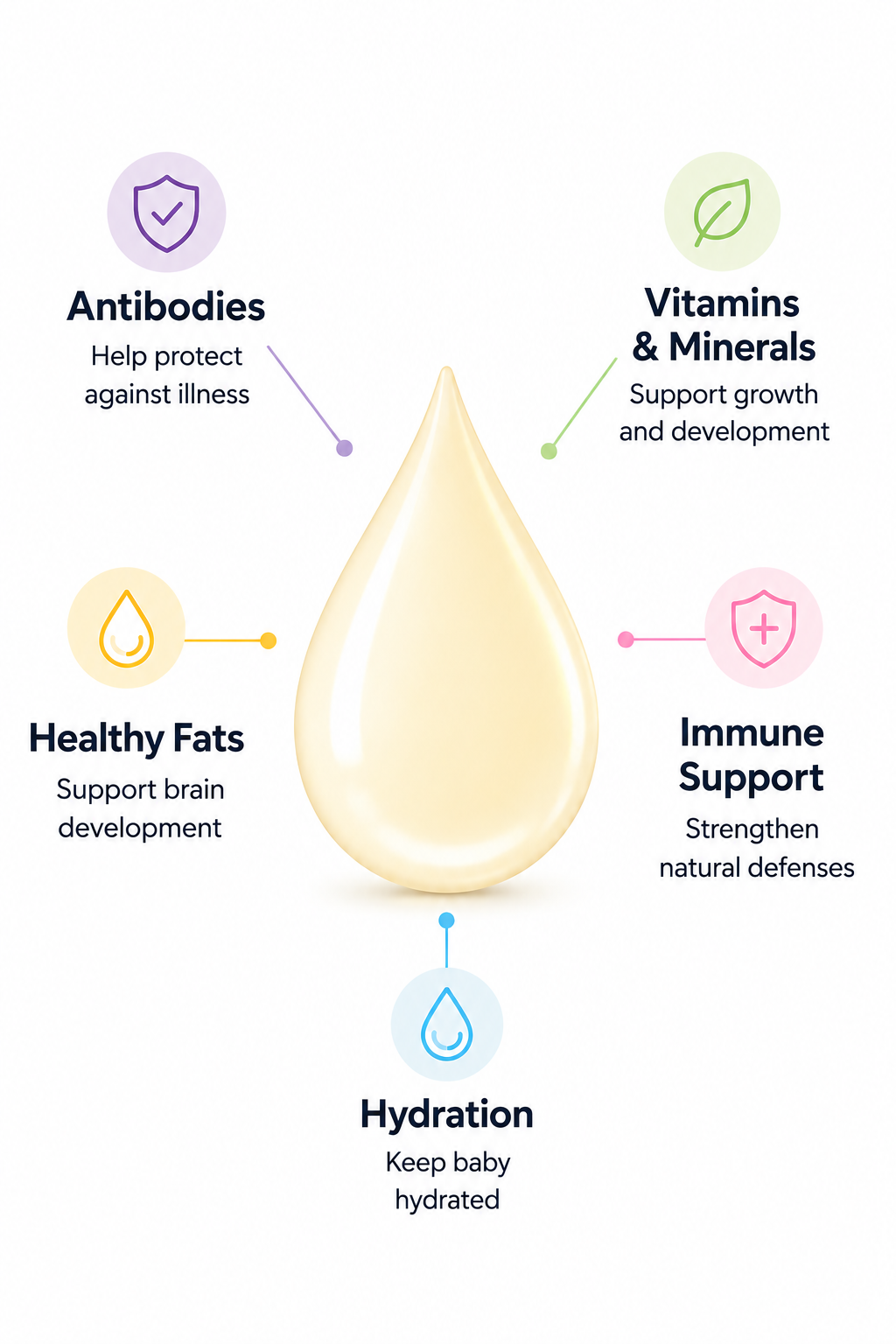
Human milk is a complete source of nutrition and provides everything baby needs for the first 6 months. Breastfeeding/chestfeeding saves families time and money.
Babies who receive breastmilk have lower risk of ear infections, pneumonia and diarrhea; lower risk of obesity, asthma and Sudden Infant Death Syndrome (SIDS).
Moms who breastfeed have lower risk of certain cancers (breast, ovary, uterus); lower risk of Type 2 Diabetes and heart disease. Their bodies recover more quickly after birth.
How is Breast Milk Made?
When baby nurses at the breast, hormones are released. These hormones tell the body to make milk and cause it to “let down” or flow.
The more often baby nurses/suckles, the more milk is made.
The Importance of Skin to Skin
Skin to Skin means baby will be placed on your bare chest immediately after birth, instead of being tightly swaddled and placed apart from you.

Skin to Skin helps calm baby and stabilize their heartbeat, breathing, and blood sugar.
This is the first chance for baby to latch! And importantly, it helps your body make milk for all future feedings.
The Importance of Rooming In
Rooming In means baby will stay in your hospital room from birth until you leave the hospital. They may leave for short medical procedures.
Rooming In lets you and baby’s visitors bond with baby.
It makes baby calmer and helps them adjust to the world.
Having your baby in the room with you allows you to learn your baby's feeding cues and for your body to respond to them.
The Importance of Feeding on Cue
Feeding on cue means you latch baby whenever they show signs of hunger (cues)
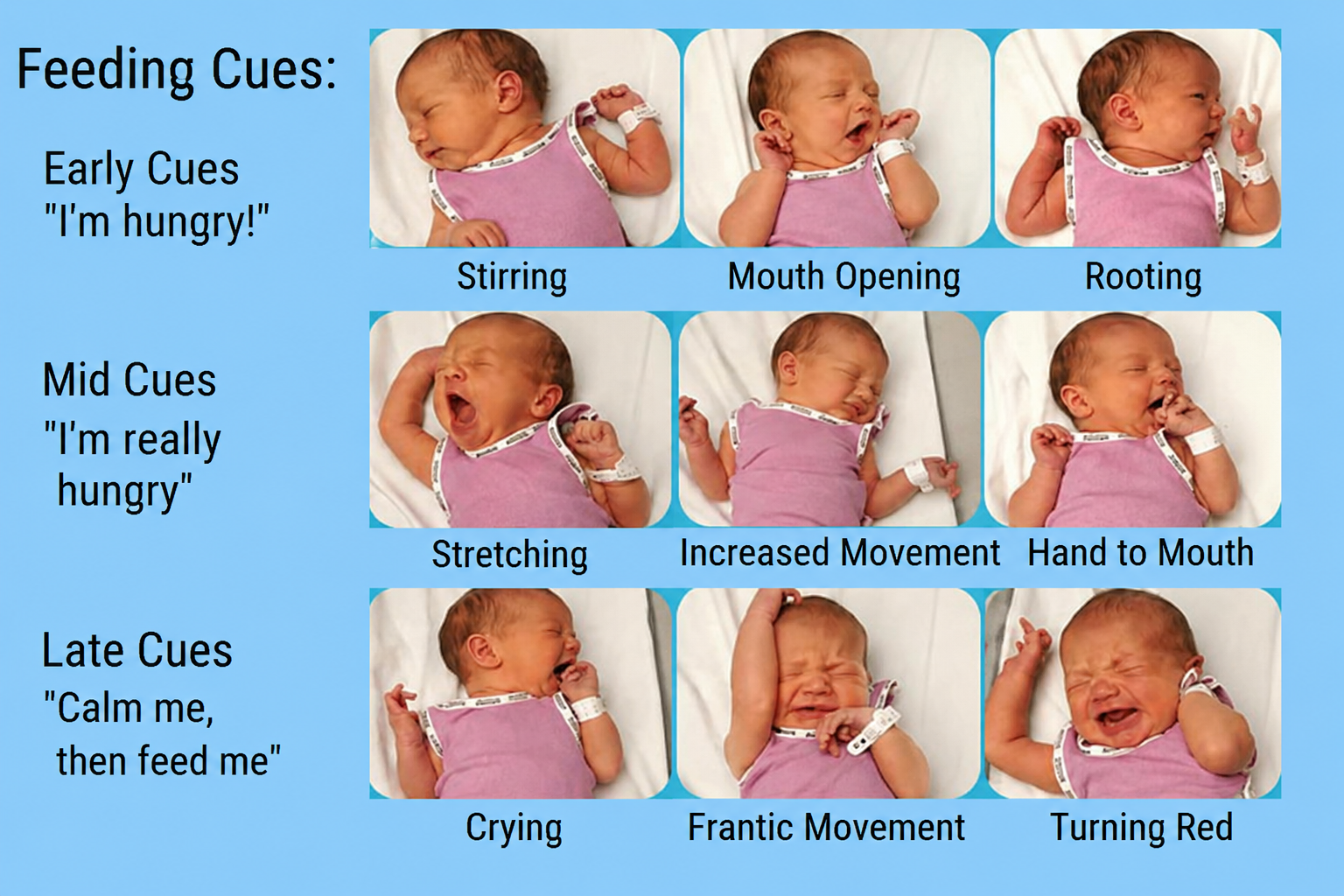
Watch the baby, not the clock, to know when it’s time to feed. A healthy full-term baby will let you know exactly when it's time for them to eat and when they've had enough.
Feeding on cue helps you make more milk especially in the early weeks.
Latching baby on when they show early signs of hunger will make it much easier – waiting until they cry causes frustration and may make it harder for them to latch well.
The Importance of Not Giving Formula
If you offer formula when your baby is hungry, instead of your milk, your body doesn't receive the message to make more milk, and your supply could decrease.
Baby may get used to the bottle and become impatient at the breast or have difficulty latching on.
Formula of any amount changes the bacteria n babies’ intestines from the good kind made from your milk, which can increase their risk of infections.
What about pumped milk and pacifiers?
During the first month until baby is latching really well and you are producing enough milk, it is recommended not to offer pacifiers or bottles.
The Importance of Positioning and Attachment
Baby will drink more milk when they have a lot of areola (darker part of breast) in their mouth, not just the nipple tip. This "deep latch" is the most comfortable position and won’t hurt your nipples.
A deep latch lets baby drink more milk to help them grow.
A deep latch helps you make more milk.
How to Latch Baby
Hold baby close, tummy to tummy, with their ear, shoulder and hip all in one line. Have your nipple pointed towards their nose, resting on their upper lip. Wait for baby's mouth to open wide and bring them quickly toward the breast.

Watch these latching videos:
Attaching Your Baby at the Breast - click here to watch in 38 languages!
Or, try the Sandwich Hold.
You can also learn more from WIC here.
If the latch is painful, take baby off the breast and try again – ask for help if you’re having trouble!
If baby can’t latch on, it is very important to remove milk by hand or the pump to feed baby. Doing this tells your body to keep making milk. See FAQs below
How do I know my baby is getting enough?
The small amount of nutritious milk you produce called colostrum is all your baby needs in the first few days. As baby grows you will produce more milk to meet their growing needs.
Signs baby is getting enough milk:
-Back to birthweight by day 10
-Latching 10-12 times in 24 hours
-Jaw drops down when swallowing and you may hear a “cuh” sound
-Baby has 3-4 yellow bowel movements and 3-4 wet diapers by day 3-4
To learn more, watch this video or read this handout
GET HELP NOW
- Call the NYC Breastfeeding Warmline: 646-965-7212 Monday to Friday 9 am-5 pm. Speak to a lactation consultant by phone, video, or in person.
- Text or call Ryan WIC at 212-865-0410, or apply for WIC here.
- Attend Dr. Kelter’s Lactation Clinic. To register call 212-749-1820
My Care Team

Katie Kelter, MD, IBCLC, FAAP,NABBLM-C
- Pediatrics
- Breast/Chestfeeding & Lactation

Helene Rosenhouse-Romeo, MPH, RD, CDN, CLC
- Nutrition
- Women’s Health
- Breast/Chestfeeding & Lactation

Yanina Rodich, MS, CLC, IBCLC
- WIC
- Breast/Chestfeeding & Lactation

Cesarina Garcia
- WIC
- Breast/Chestfeeding & Lactation
Questions
Many parents worry they are not producing enough milk — but often, they are! As long as your baby is gaining weight well and having enough wet and dirty diapers, your supply is likely just fine. (See the section above: "How Do I Know My Baby Is Getting Enough?")
The most common reason for low milk supply is not breastfeeding or pumping often enough, or supplementing with formula. The good news is that supply can often be increased simply by latching your baby more frequently — or pumping more often if you are pumping. Breastfeeding works on a supply-and-demand system: when you remove more milk from your breasts, your body gets the signal to make more milk.
Tips to help increase your supply:
- Latch your baby at the earliest signs of hunger (rooting, lip smacking, bringing hands to mouth) — don't wait until baby is crying
- Aim to breastfeed at least 10–12 times in 24 hours, usually every 1–3 hours, or more often if your baby needs it
- Offer both breasts at each feeding
- If you are pumping, try adding extra pumping sessions throughout the day
What about lactation cookies, teas, and supplements?
There is not a lot of good evidence that certain foods or lactation teas and herbs will increase your milk production. However, there may be specific herbs or medications that can be recommended by a breastfeeding medicine physician based on your individual situation.
Where to get help:
If you are concerned that you are not producing enough milk:
- Call the NYC Breastfeeding Warmline: 646-965-7212 Monday to Friday 9 am-5 pm. Speak to a lactation consultant by phone, video, or in person.
- Text or call Ryan WIC at 212-865-0410, or apply for WIC here.
- Attend Dr. Kelter’s Lactation Clinic. To register call 212-749-1820
Feeding a premature baby can feel overwhelming, but with the right support, you and your baby can succeed.
Breast milk is especially important for premature babies. It helps protect against serious complications like infections and bowel problems, and supports brain development. If your own milk is not yet available, pasteurized donor milk or preterm formula may be used.
Start pumping early and often. Most premature babies cannot breastfeed directly at first. Begin pumping within 6 to 8 hours after birth, at least every 3 to 4 hours (including overnight), using a double electric breast pump. Even small amounts of early milk (colostrum) are valuable.
Hold your baby skin-to-skin (kangaroo care) whenever possible — it stabilizes your baby's vital signs, promotes bonding, and supports breastfeeding. Ask your NICU team when you can start.
Transitioning to breastfeeding. Babies usually develop the ability to breastfeed around 32 to 34 weeks gestational age. Your care team will guide this gradual transition from tube feeding. Be patient — every small step counts.
Your baby may need extra nutrients. Your care team may add a fortifier to your breast milk or recommend supplements like vitamin D and iron to support your premature baby's growth.
Or learn more at firstdroplets.com
Breast engorgement can cause your breasts to feel full, swollen, hard, and painful. This is normal in the first few days and weeks and will improve over time. To relieve discomfort:
- Feed your baby often and try not to skip feedings
- Apply ice packs or frozen peas after feeding
- Gently massage the breast from the nipple towards the armpit to help move fluid, but avoid deep or hard massage because it can make swelling worse
- Take ibuprofen or tylenol to help with pain and inflammation (check with your provider if you're unsure)
- Lie on your back to rest and wear a supportive bra
- If you are pumping, make sure not to overpump as this can increase swelling
- If baby isn't latching, try a technique called reverse pressure softening https://www.azdhs.gov/document...
Call your healthcare provider if you have a fever lasting more than 24 hours, worsening breast redness, or increasing pain.
Most medications are safe to take while breastfeeding, and only small amounts pass into breast milk. Do not stop breastfeeding or taking a medication without talking to your healthcare provider. If you are unsure whether a medication, supplement, alcohol, or other substance is safe, check trusted resources like the InfantRisk Center or MotherToBaby. If you are not sure whether your milk is safe to use, pump and store it instead of throwing it away until you can find out.
InfantRisk Center Hotline: 1-806-352-2519
https://www.infantrisk.com/
MotherToBaby Hotline: 1-866-626-6847
https://mothertobaby.org/
Breast Milk Storage Guidelines
Store breast milk in clean bottles or breast milk storage bags.
Label milk with the date it was pumped.
Fresh breast milk can stay:
• At room temperature for up to 4 hours
• In the back of the refrigerator for up to 4 days
• In the freezer for about 6 months
Thaw frozen milk in the refrigerator or warm water. Do not microwave.
If your baby does not finish a bottle of breast milk, use it by the end of the day.
Learn more here.
Returning to Work While Breastfeeding
Plan Ahead
• Talk to your employer about a private place to pump breast milk.
• Ask how much parental leave time you can take.
• Ask about a flexible or reduced schedule when you return.
• If possible, choose child care close to work so you may be able to breastfeed during the day.
• Obtain a free breast pump through insurance.
While You Are on Leave
• Breastfeed often to help build your milk supply.
• Start pumping and freezing extra milk about 1 month before your return.
• Practice giving your baby a bottle of stored breast milk a few weeks before your return.
When You Return to Work
• Pump for about 20–30 minutes, 2–3 times during an 8-hour workday.
• Store breast milk safely using breastmilk storage guidelines.
• Breastfeeding before and after work can help you and your baby stay connected.
Know Your Rights
• In New York State, employees have the right to paid break time to pump breast milk at work.
• Employers must also provide a private space and information about these rights.
• Read the New York State Department of Labor Policy: The Rights of Employees to Express Breastmilk in the Workplace
For more help planning your return to work, review the Making it Work Toolkit
Ryan Health’s prenatal lactation class run by Dr. Katie Kelter – 3rd Thursday Morning of the month. To register, call 212 749 1820.
In-Person Lactation Support Group
NYC Mommies Club at East Harlem Neighborhood Health Action Center
Tuesdays at 10:30am 158 East 115th Street
Walk in or register in advance
Instagram: @nycmommiesclub
Online Lactation Support Group:
Morrisania Baby Cafe, Thursdays 11 am English and 1 pm Spanish
Go to: hhc.webex.com/meet/lewiskd, Or join by phone: 844-621-3956
Access code: 474 823 967
Free in-home lactation & newborn support. Call 311 to see if you qualify
If you live in a shelter, call 718-637-5235
We respect the right of all individuals to make decisions about feeding their baby and to describe their feeding experience in the terms that suit them, including human milk feeding, breastfeeding, chestfeeding, nursing, suckling, and exclusively expressing.