
Your baby is here! You may be experiencing many "firsts." Find out what you need to know, from delivery to the first few days at home. Get tips on positioning your baby for breastfeeding and achieving a good latch. Learn how to tell when your baby is hungry and how much milk your baby needs. We also have resources that help you take care of your baby and yourself.
Breastfeeding Basics

Breastfeeding is natural, but that doesn't mean there isn't a lot to learn! At WIC, we've got the info you need to make breastfeeding successful. Let's start with some basics.
Babies' tummies are tiny. It doesn't take much to fill your baby up, but you'll need to feed your newborn baby a lot: 8-12 times in a 24-hour period. Feeding your baby that often will be good for your baby. It will also tell your body to keep making milk.
How do you know if your baby is getting enough milk? One of the easiest signs is to pay attention to what's coming out the other end. The color, texture, and frequency of poops and wet diapers will tell you a lot. Other signs that your baby is getting enough milk may include:
- Your baby is satisfied and content after feedings.
- Your breasts may feel softer after feedings.
- Your baby breastfeeds at least 8 to 12 times every 24 hours, including at night.
- Your baby is gaining weight.
How much milk your baby needs will change as the baby grows, and your body will adjust to those changes. If your baby has a growth spurt, they might want to nurse more often or for longer periods. Your body will adjust to that, too.
The important thing is to nurse as long and as often as your baby wants and to let your baby eat until full.
Baby's Hunger Cues: Learn how to tell when your baby is hungry or full.

As a new mom, you may be wondering how often and how much to feed your baby. Your baby will give you signs to let you know when they are hungry and full. It may take some time, but you'll learn exactly what these signs are. Your WIC breastfeeding staff can help you learn your baby's cues.
Signs Your Baby is Hungry
Watch for these signs that your baby is hungry, and then feed the baby right away:
- Fists moving to the mouth.
- Head turning to look for the breast.
- Becoming more alert and active.
- Sucking on hands or lip smacking.
- Opening and closing the mouth.
Many moms think crying is the only sign that their baby is hungry. But it’s actually a sign of distress. Hungry babies will show signs of hunger before they begin to cry. Watching for and responding early to your baby’s hunger cues may help prevent crying. Once the baby is crying, it can be harder to latch.
Signs Your Baby is Full
It's important to let your baby nurse until they're full. Some signs that babies are done eating are:
- Baby releases or "falls off" your breast.
- Baby turns away from your nipple.
- Baby relaxes their body and opens their fists.
If your baby finishes eating on one breast and seems full, burp them and change their diaper (if needed), then offer the other breast. If your baby doesn't seem interested or doesn't want to latch, they may no longer be hungry. Some babies may eat from both sides at every feeding, while others may only eat from one side.
Steps and Signs of a Good Latch

No matter what position you use to feed your baby, it's important to get a good latch. It takes practice, both for you and your baby. But a good latch will help you feel comfortable and help your baby get the most milk.
Steps to a Good Latch

1. Tickle your baby's lips with your nipple. This will help the baby open their mouth wide.
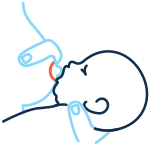
2. Aim your nipple just above your baby's top lip. Make sure your baby's chin isn't tucked into their chest.
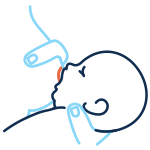
3. Aim your baby's lower lip away from the base of your nipple. Baby's lips should be turned outward like a fish. Your baby should lead into the breast chin first and then latch onto your breast. Your baby's tongue should be extended, and your breast should fill your baby's mouth.
If your baby latches only on the tip of your nipple or it hurts, gently insert a clean finger into your baby's mouth to break the latch, then try again.
Signs of a Good Latch
Check with your WIC breastfeeding staff to find out what a good latch feels like for you. Some signs of a good latch may be:
- The latch is comfortable and pain-free.
- Your baby's chest and stomach rest against your body so that the baby's head is straight, not turned to the side.
- Your baby's chin touches your breast.
- Your baby's mouth opens wide around your breast, not just the nipple.
- Your baby's lips turn out.
- Your baby's tongue cups under your breast.
- You hear or see swallowing.
- Your baby's ears move slightly.
If you're having trouble getting a good latch, try:
- Moving to a quiet, calm place.
- Holding your baby skin to skin. While both you and your baby are undressed, hold your baby against your chest.
- Letting your baby lead. Support your baby's neck, shoulders, and hips with your hands. Offer your breast, but let your baby find your nipple on their own.