News | Announcement, Community
Focus On…Glaucoma Can Rob You of Your Eyesight Martin Aviles, Optometrist
The most common form of glaucoma is incurable and can lead to blindness. Once you have it, you always have it. In the early stages, there are no symptoms. The only way to know if you have it is to have regular eye exams.
The good news about glaucoma is that it’s treatable, and it is possible to halt its progression.
What is Glaucoma?
Glaucoma is a disease that damages the optic nerve, often caused by high fluid pressure in the eye. It damages your peripheral vision, moving very slowly over a period of years. Untreated, you may ultimately lose your eyesight altogether. This is called open-angle glaucoma.
Many people with untreated open-angle glaucoma who are losing their eyesight will make accommodations for their loss of vision. They will make visual and mental adjustments in their movements and activities to compensate, yet never really know why they are bumping into furniture, for instance. By the time someone is aware of their vision loss it is already quite advanced.
Closed-angle glaucoma is less common and occurs when the iris is very close to the drainage angle in the eye, and it gets blocked. This type of glaucoma can cause blindness very quickly. This can be treated and essentially cured with the use of a laser specifically to keep the angle from getting blocked. According to the American Academy of Ophthalmology, there may be symptoms that include:
- severe pain in the eye or forehead
- redness of the eye
- decreased vision or blurred vision
- seeing rainbows or halos
- headache
- nausea
- vomiting
Who Gets Glaucoma?
More than three million people in the US have glaucoma, according to the Glaucoma Research Foundation, and about half of them don’t know it. Anyone can get glaucoma. It does not discriminate. Risk factors include:
- Age: people over 60 are at higher risk; that risk begins at age 50 for individuals in the Black community;
- Family history: Genetics plays a role in your likelihood of having glaucoma;
- Race: Black, Hispanic, and Asian (closed angle) populations are at higher risk;
How is Glaucoma Diagnosed?
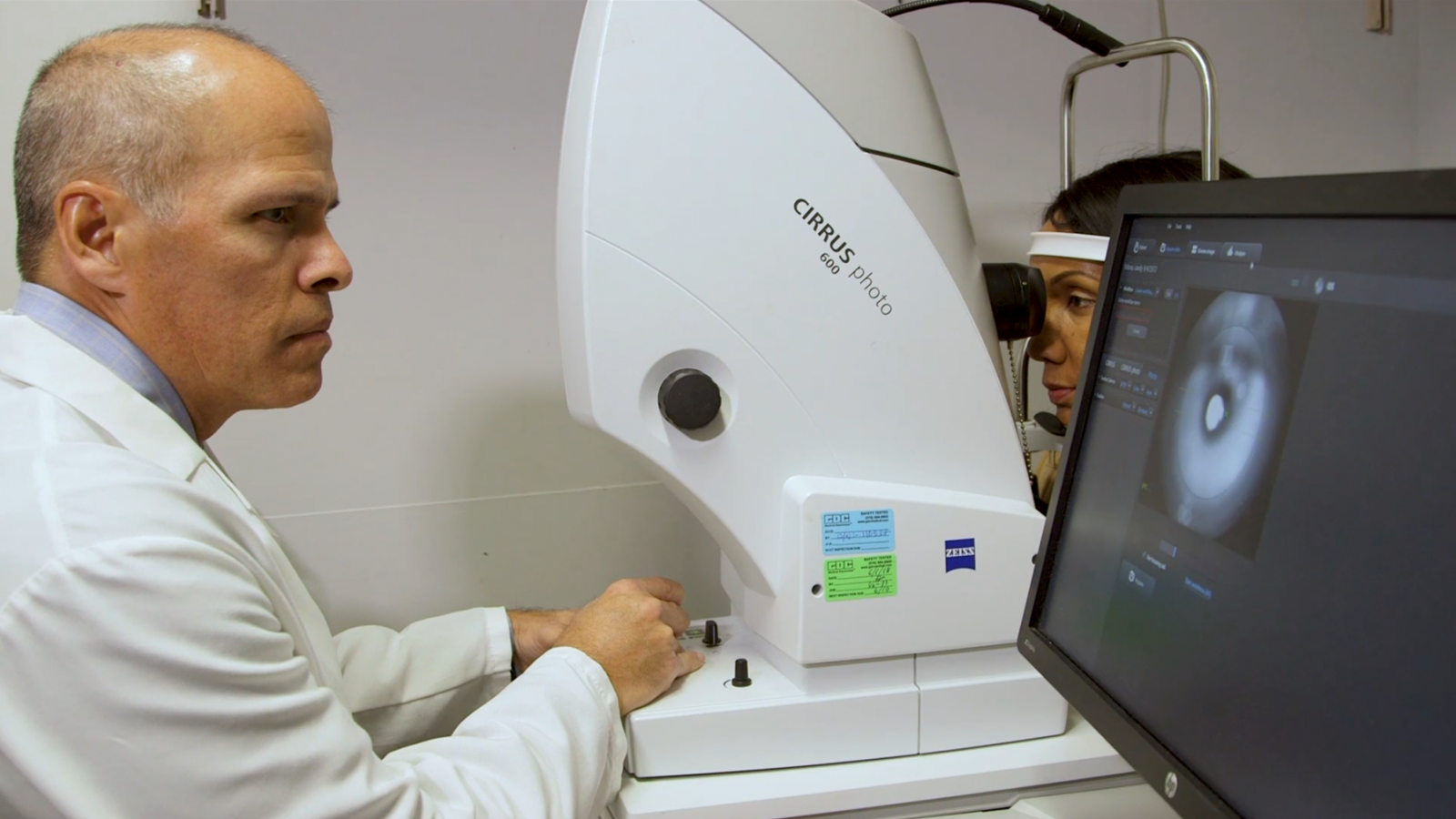
A simple eye exam can diagnose glaucoma. Your eye doctor will measure your eye pressure, inspect your eye’s drainage angle, examine your optic nerve for damage, test your peripheral vision, take a picture of your optic nerve, and measure the thickness of your cornea.
How is Glaucoma Treated?
Open angle glaucoma is most commonly treated with daily eyedrops that lower eye pressure. Over time, you may need to increase the number of drops in your eyes.
Laser surgery can also assist in fluid drainage to lower eye pressure. This treatment usually only lasts for a few years and sometimes is repeated multiple times. In the most severe cases, a glaucoma specialist is needed to perform surgery.
Seeing your Ryan Health eye doctor for an annual checkup is the best way to keep your eyes healthy and catch early signs of glaucoma. With providers at Ryan Health | West 97th Street, NENA, Women & Children’s, and Ryan Chelsea-Clinton, we can ensure your eye health.